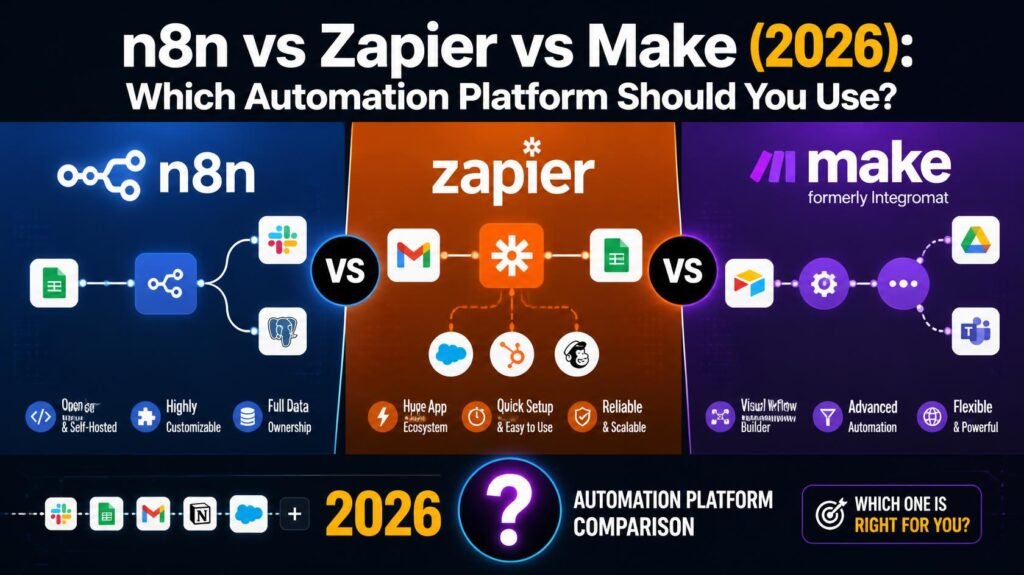
Quick Answer
Choose Zapier for straightforward automations and accessible setup, Make for visual branching workflows, or n8n for custom logic and deployment control. Match the platform to your integrations, technical skills, and expected usage. Compare the cost of a complete workflow, including recurring runs, rather than relying on the entry-level plan price alone.
Disclosure: Operant Solo is reader-supported. We may earn an affiliate commission when you purchase through links on this page, at no additional cost to you. Recommendations are based on independent testing and evaluation.
The Enterprise Automation Landscape in 2026
The decision matrix for selecting an automation platform has grown exponentially complex. In prior years, organizations defaulted to legacy systems regardless of operational cost. However, the rise of autonomous ai agents and the necessity for strict data residency compliance have fractured the market. Business operators, managed service providers (MSPs), and development teams must rigorously evaluate their infrastructure before committing to a vendor.
This comprehensive guide dissects the architectural differences, pricing models, and AI capabilities of the three dominant low-code platforms to determine which system aligns with your 2026 operational objectives.
1. Zapier: The Accessible Giant
Zapier remains the undisputed pioneer of API connectivity. It prioritized extreme accessibility, allowing non-technical marketing and sales professionals to build functional pipelines in minutes.
Core Architecture and Usability
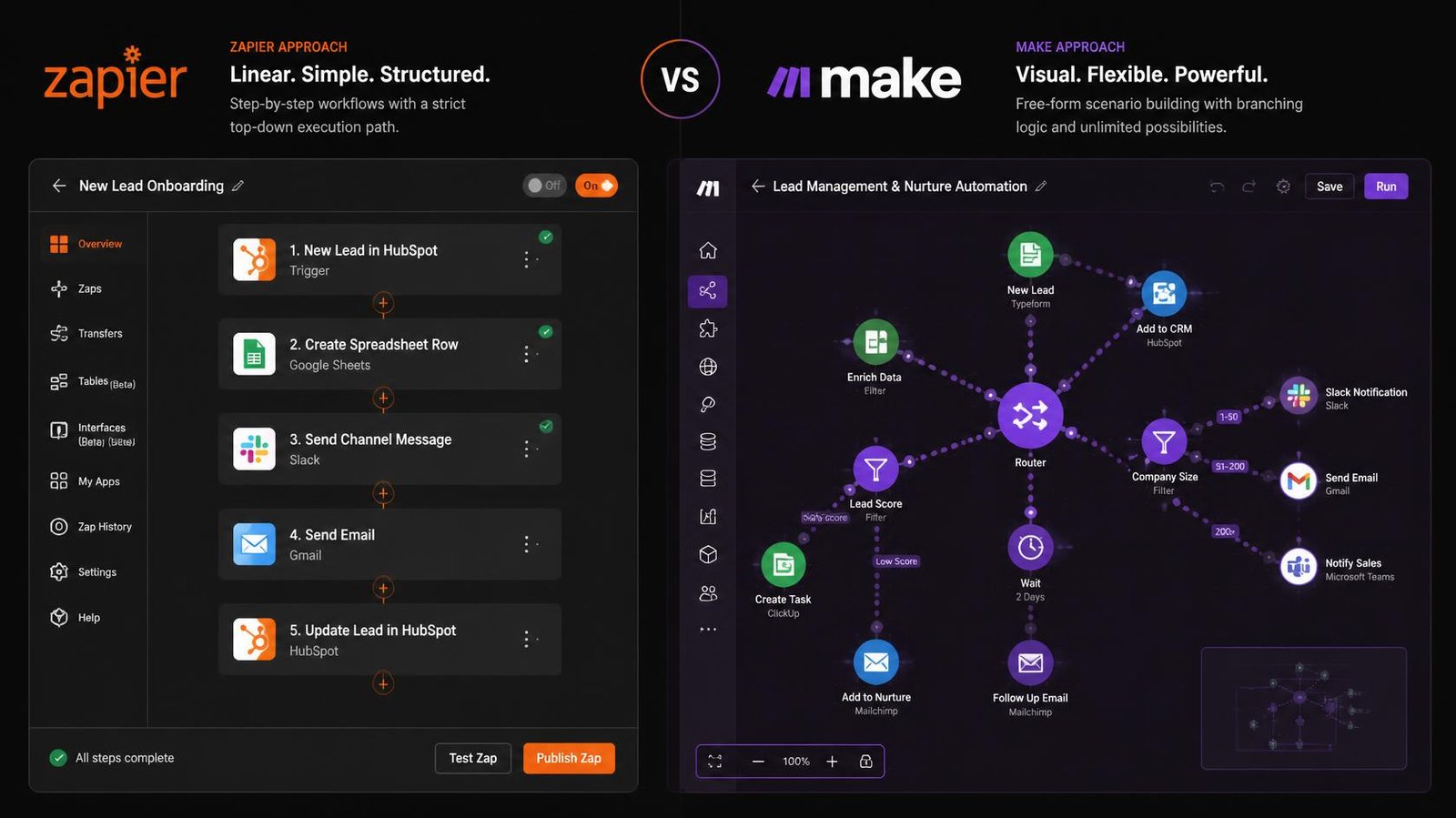
Zapier utilizes a strictly linear, top-down visual interface. Users select a trigger and define sequential actions. While this is highly intuitive, it severely restricts complex system design. Building a massive, multi step pipeline with complex conditional routing is cumbersome. The platform is engineered to abstract complexity away from the user, making its learning curve the shallowest on the market.
Integrating AI Agents
In response to market shifts, Zapier launched Zapier Central, allowing users to deploy autonomous bots directly within their ecosystem. These bots can trigger standard Zapier workflows. While highly accessible, configuring these agents requires operating entirely within Zapier’s proprietary black box, limiting the deep, node-level customization available in competing platforms.
The Pricing Problem
The fundamental flaw with Zapier for enterprise and agency deployments is its billing architecture. Zapier bills on a strict per-task model. Every single action—including internal logic steps like formatting dates or simple data filtering—consumes a paid task. When an organization scales into high volume data processing, zapier charges become financially devastating. Processing 50,000 tasks per month can easily push software licensing costs into thousands of dollars annually, drastically reducing agency margins.
Developers weighing Zapier against a code-first tool should read Pipedream vs Zapier.
2. Make (Formerly Integromat): The Visual Powerhouse
Make bridges the gap between Zapier’s simplicity and n8n’s developer-centric architecture. It is widely considered the industry standard for operations managers who require complex logic without managing self-hosted infrastructure.
Core Architecture and Usability
Make’s defining feature is its visual canvas. It replaces linear blocks with circular modules connected by highly flexible paths. This allows developers to easily construct advanced branching logic, parallel execution routes, and sophisticated error handlers. It handles complex data structures (like arrays and collections) natively, whereas Zapier often requires external formatting tools.
Integrating AI Agents
Make integrates flawlessly with OpenAI, Anthropic, and other foundation models. While it does not natively feature “Agent” nodes that manage conversational memory like n8n, it excels at deterministic AI pipelines. For example, routing an email to an LLM for sentiment analysis and then branching the output to different Slack channels based on the result is executed flawlessly in Make.
Superior Cloud Pricing
Make utilizes an execution based pricing model, but it is vastly more generous than Zapier. Make charges per “operation,” but their cost-per-operation is exceptionally low. A $20/month Make subscription often provides the same execution volume as a $150/month Zapier subscription, making it highly attractive for growing agencies.
3. n8n: The Developer’s Standard
n8n is fundamentally different from its competitors. It operates on a fair-code, open source model (officially “source-available”), targeting software engineers, technical founders, and enterprise IT departments.
Core Architecture and Usability
n8n utilizes a node-based architecture. While the visual canvas is clean, the platform expects users to understand JSON and basic JavaScript. The learning curve is steep, but the payoff is absolute control. If a native integration does not exist, developers can utilize the generic HTTP Request node. While Zapier restricts custom API calls on lower tiers, n8n allows unlimited custom http requests, allowing developers to connect to undocumented APIs or legacy internal systems effortlessly.
AI Agents and Data Residency
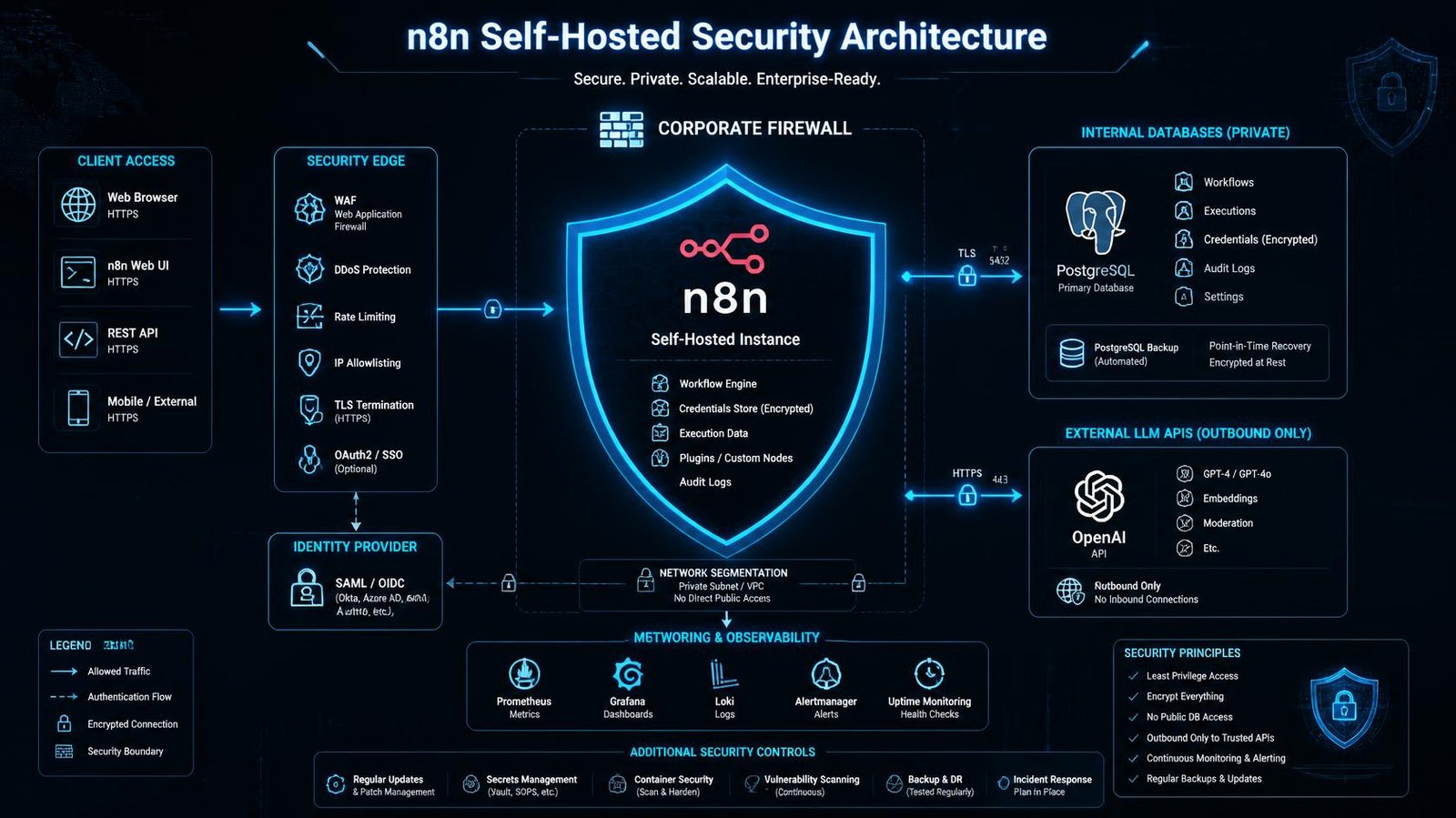
n8n dominates the 2026 market for AI orchestration. The platform features dedicated “Advanced AI” nodes, Vector Store connectors (Pinecone, Qdrant), and Window Buffer Memory components. Developers can build autonomous agents that query private databases securely. Crucially, because n8n can be self-hosted via Docker, organizations maintain absolute data residency. Highly regulated industries (healthcare, finance) cannot send proprietary data through Zapier or Make’s public servers. Self-hosted n8n ensures that sensitive data never leaves the organization’s firewall.
The Pricing Advantage
The pricing structure of n8n disrupts the industry standard.
- Self-Hosted: The community edition is entirely free, regardless of execution volume. Organizations only pay for their own AWS or DigitalOcean server costs.
- Managed Cloud: If you utilize hosted n8n via their cloud infrastructure, the pricing is highly competitive. Furthermore, unlike Zapier, n8n charges strictly for full workflow execution, not individual steps. Whether a workflow has 2 steps or a 50-step workflow, it consumes only one execution credit. This makes high-complexity, multi step automations virtually free compared to competitors.
Direct Comparison: Which Platform Wins?
To finalize the n8n vs zapier vs make debate, we must evaluate them across specific operational categories.
Category 1: Best for Non-Technical Teams
Winner: Zapier. If your marketing team needs to automate simple lead transfers without consulting the IT department, Zapier is the only viable option. Its interface is foolproof, and its massive integration library ensures virtually zero coding is required.
Category 2: Best for Complex Logic on the Cloud
Winner: Make. For operations managers who need sophisticated data manipulation and branching without the burden of maintaining server infrastructure, Make is unparalleled. Its visual array management is vastly superior to Zapier.
Category 3: Best for Cost Efficiency at Scale
Winner: n8n. The math is undeniable. If an agency processes millions of records monthly, Zapier will destroy their margins. By deploying a self-hosted n8n instance, that same agency reduces their monthly software licensing costs to zero, paying only a fraction of the cost for raw server hosting.
Category 4: Best for AI Agent Orchestration
Winner: n8n. Building commercial-grade, multi-model AI agents requires custom code, deep API access, and strict data privacy. n8n provides specific AI routing nodes and memory modules that neither Make nor Zapier offer natively at the same depth.
Conclusion: The Migration Trend of 2026
The definitive trend in 2026 is migration. Organizations typically launch their initial automations on Zapier due to its accessibility. However, as their operational volume increases, they inevitably encounter crippling software costs and logic restrictions.
The standard lifecycle involves migrating from Zapier to Make to reduce costs and increase capability. Finally, as organizations mature and require self-hosted security or complex AI orchestration, they transition their core infrastructure to n8n.
If you are an agency owner, MSP, or technical founder launching a new project in 2026, bypass the restrictive platforms and build directly on n8n. The initial learning investment pays massive dividends in long-term scalability and profitability.
Which should you choose?
Zapier
Choose Zapier if your team is non-technical and wants the easiest setup and the most integrations.
Make
Choose Make if you need visual branching logic on a cloud plan.
n8n
Choose n8n if you need custom logic, AI agent orchestration or the lowest cost at scale.
Operant Solo may earn a commission if you purchase through these links, at no extra cost to you.
Frequently Asked Questions
Which platform is cheapest: n8n, Zapier, or Make?
Self-hosted n8n is definitively the cheapest, as the community edition is completely free regardless of volume. For managed cloud hosting, Make is significantly cheaper than Zapier per operation.
Why do companies leave Zapier?
The primary reason companies migrate away from Zapier is cost. Zapier bills per individual task (including internal formatting steps). High-volume data processing quickly becomes cost-prohibitive. Furthermore, developers find its linear interface too restrictive for complex systems.
Does Make require coding knowledge?
Make does not strictly require coding knowledge. However, to utilize its full potential (managing arrays, collections, and complex data structures), users must understand basic data logic and API principles.
Why is data residency important in automation?
Heavily regulated industries, such as healthcare (HIPAA) and finance (SOC2), are legally prohibited from passing sensitive client data through third-party public cloud servers. Self-hosted n8n allows these companies to automate workflows behind their own firewalls, ensuring total legal compliance.
Related Reading:
Pingback: Pipedream vs Zapier 2026: Code-First vs No-Code Automation
Pingback: HRIS for Startups: 5 Tools Ranked by API & Automation