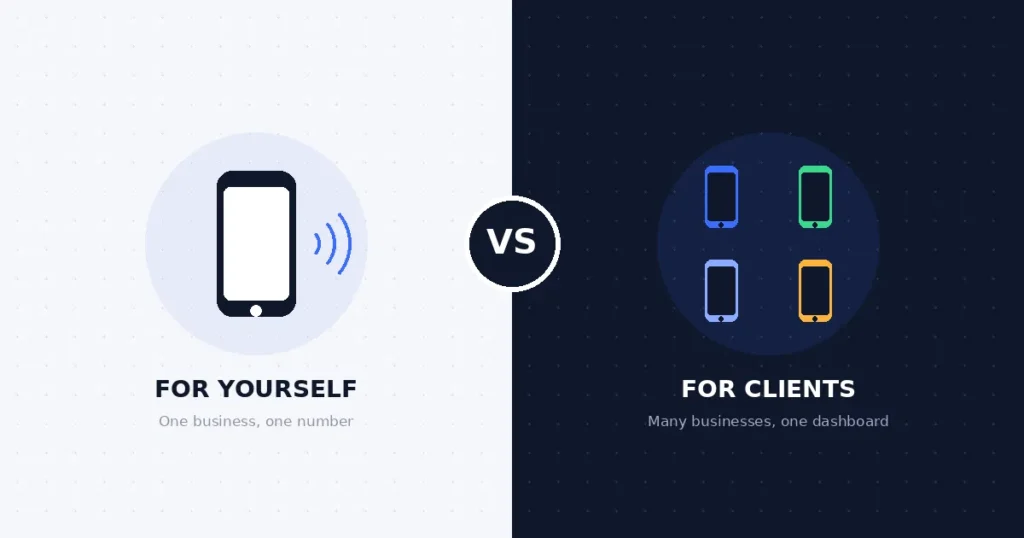
The Death of the Traditional Front Desk
For decades, small businesses have relied on the same broken system to handle customer inquiries: a receptionist sitting at a front desk, or an outsourced call center.
When call volume spikes, calls go to voicemail. When customers call after standard business hours, they hear an automated recording telling them to try again tomorrow. When a traditional phone tree (“Press 1 for Sales, Press 2 for Support”) is deployed, customer satisfaction plummets.
This model is inefficient, expensive, and directly limits revenue growth. Missing a call from a high-intent prospect translates to lost business.
Quick Answer: Launching an ai receptionist agency allows you to replace this outdated model for local businesses. By deploying an ai virtual receptionist utilizing ultra-low latency LLMs, you provide small businesses with an agent that answers calls 24/7, handles multiple calls simultaneously, executes complex appointment scheduling, and integrates directly with their CRM to eliminate manual data entry.
Here is the definitive guide to building and scaling a highly profitable agency focused exclusively on deploying ai voice agents in 2026.
Disclosure: Operant Solo is reader-supported. We may earn an affiliate commission when you purchase through links on this page, at no additional cost to you. Recommendations are based on independent testing and evaluation.
Why the AI Answering Service Model is Booming
To sell this service effectively, you must understand why businesses are desperately seeking alternatives to human call centers and traditional auto-attendants.
1. Zero Missed Calls (Infinite Concurrency)
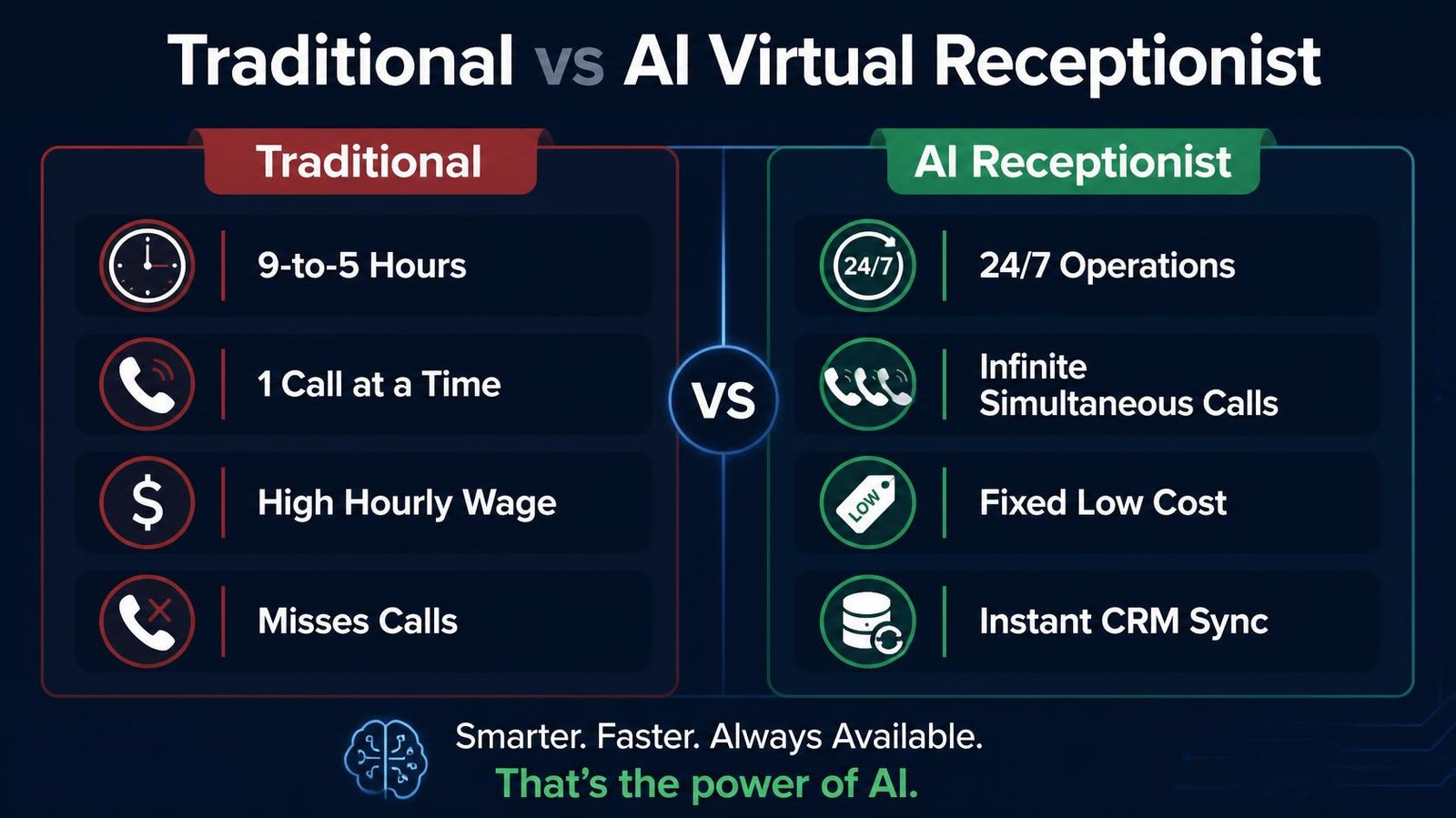
A human receptionist can only handle one call at a time. If the phone rings while they are speaking to a customer, the second caller goes to voicemail. An ai receptionist handles infinite concurrency. If ten customers call the business’s phone number at the exact same second, the AI spins up ten simultaneous voice instances in real time. No customer is ever placed on hold.
2. Elimination of Manual Data Entry
When a traditional answering service takes a message, they send an email to the business owner, who then has to manually type that data into their CRM. A modern ai answering service connects directly to the business’s database. When the AI speaks to a caller, it extracts their name, phone number, and intent, and pushes it via API to the CRM instantly.
3. Action-Oriented Operations
Legacy auto-attendants can only route calls. An AI receptionist takes action. If a patient calls a dental clinic, the AI can check the clinic’s calendar API, find an open slot, and definitively book the appointment while the patient is still on the phone.
The Tech Stack: Building AI Voice Agents
If you are starting an ai receptionist agency, you do not need to build voice-to-text models from scratch. You act as an orchestrator, connecting cutting-edge infrastructure to solve business problems.
1. The Telephony Layer (Twilio or Bland AI)
You need a system that can port a client’s existing phone number or provide a new one, and convert the raw audio of a phone call into digital data.
- Twilio is the enterprise standard for programmatic phone calls.
- Bland AI / Vapi are specialized platforms built specifically for deploying AI voice agents rapidly.
2. The Intelligence Layer (OpenAI or Anthropic)
The brain of the operation. You need an LLM capable of understanding natural language and responding in milliseconds to prevent awkward pauses on the phone. In 2026, GPT-4o’s native audio capabilities provide ultra-low latency reasoning, making the AI sound remarkably human.
3. The Orchestration Layer (n8n)
When the AI makes a decision, it needs to execute a task. n8n is the preferred platform for backend orchestration. When the ai answer results in a booked meeting, n8n catches the webhook from the telephony layer and executes the logic to update the client’s management system.
We walk through the full technical setup in our guide to building an AI voice receptionist.
Step-by-Step: Designing the Perfect Call Flow
Building a successful voice agent requires designing a flawless conversation architecture. You cannot simply give an LLM a prompt and hope for the best; you must build strict guardrails.
Step 1: The System Prompt
The system prompt is the agent’s personality and rulebook. It must be highly specific.
“You are Sarah, the virtual receptionist for Apex Plumbing. Your goal is to qualify callers, book emergency appointments, and answer basic FAQs. Speak in a warm, professional tone. Keep responses under two sentences. Do not offer pricing on custom jobs.”
Step 2: Implementing Tools (Function Calling)
An AI agent is useless if it cannot interact with the real world. You must equip the agent with tools (APIs).
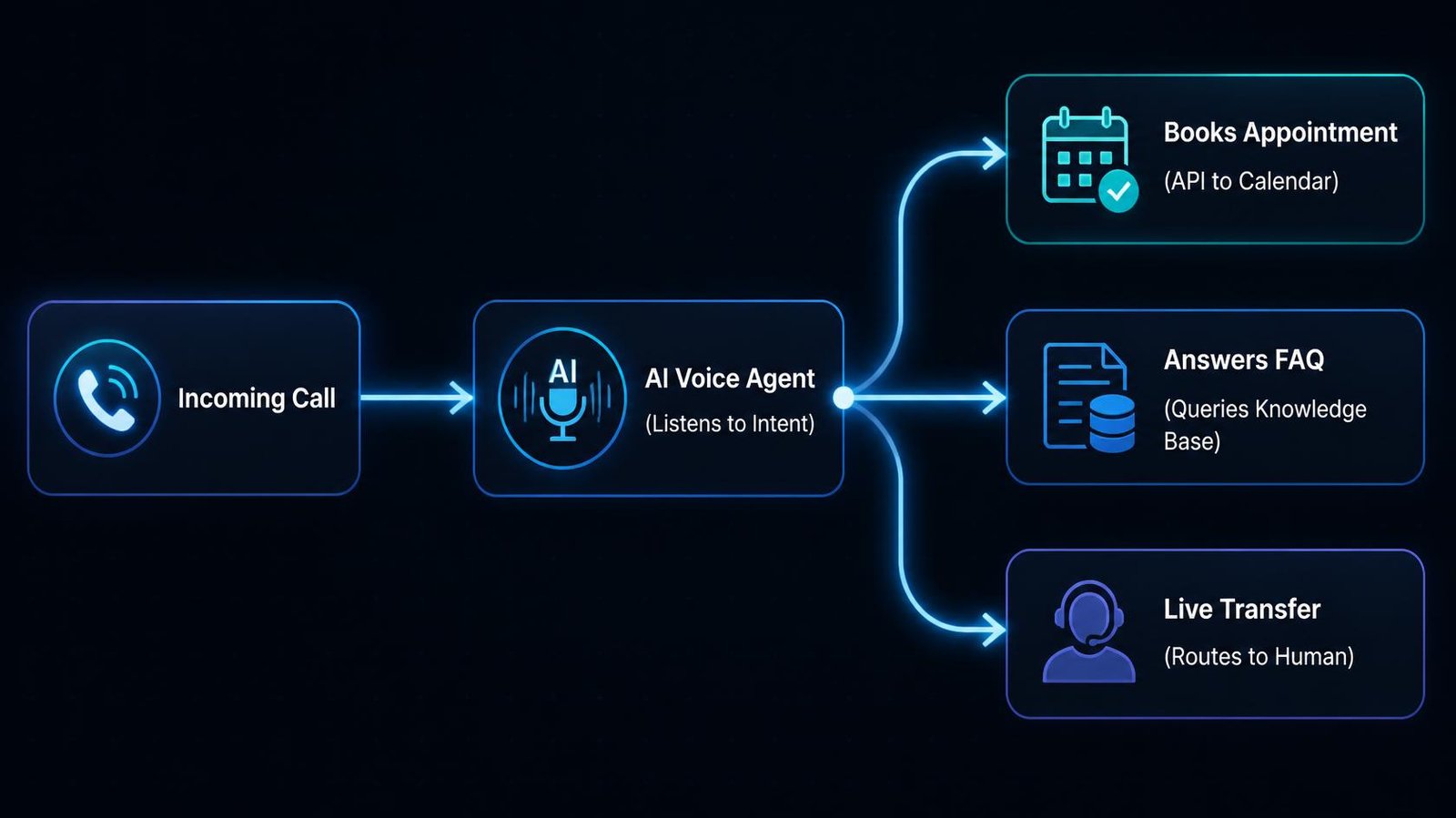
Check_Availability(date)Book_Appointment(name, phone, issue, time)Transfer_Call(department)
When a caller asks, “Do you have anything open tomorrow afternoon?”, the agent calls the Check_Availability tool, reads the JSON response from the client’s calendar, and replies natively: “Yes, we have a slot at 2:00 PM. Would you like me to book that for you?”
Step 3: Complex Routing Rules
You must build logic that calls based on specific criteria. This replaces the dreaded phone tree.
Instead of “Press 1 for Sales,” the caller simply says what they want. The AI interprets their intent and triggers a routing rule:
- If Intent = “Billing Issue” → Route call to the accounting department’s direct line.
- If Intent = “Emergency Repair” → Send a high-priority SMS to the on-call technician.
- If Intent = “General Inquiry” → The AI answers the question directly using the client’s knowledge base.
The Most Profitable Niches for AI Receptionists
If you are launching an ai receptionist agency, do not sell to everyone. Target industries with high missed-call costs and heavy appointment scheduling needs.
1. Home Services (Plumbers, HVAC, Electricians)
When a homeowner’s pipe bursts, they call a plumber. If the plumber does not answer, the homeowner calls the next business on Google. Missing a single call can cost a plumbing business $1,000+. An ai virtual receptionist that captures the lead, logs the emergency, and texts the owner ensures zero lost revenue.
2. Healthcare & Dental Clinics
Clinics suffer from massive call volume spikes in the morning. Front desk staff are overwhelmed trying to check in patients while the phone rings constantly. An AI agent that books appointments, handles cancellations, and answers basic insurance FAQs completely eliminates this bottleneck.
3. Real Estate Brokerages
Real estate agents are rarely at their desks. An AI answering service can field property inquiries, qualify leads by asking about their budget and timeline, and instantly text the qualified lead data to the broker’s phone while they are at a showing.
Overcoming Common Objections
When selling this service, you will face skepticism from business owners. Here is how to counter the most common objections.
Objection: “My customers will hate talking to a robot.” Response: “Customers hate navigating a rigid phone tree or being placed on hold for ten minutes. Modern ai voice agents use ultra-low latency, conversational audio. They sound natural, allow the caller to interrupt, and solve the customer’s problem instantly. Customers prefer a fast, capable AI over waiting on hold for a human.”
Objection: “Can it handle complex, unique questions?” Response: “If the AI does not know the answer, we program a fallback routing rule. It will politely inform the caller that it needs to transfer them to a specialist, seamlessly handing off the call to your human staff just like a normal receptionist would.”
Objection: “I don’t want to change my phone number.” Response: “You do not have to. We port your existing phone number into our system, or simply set up call forwarding. When someone calls your current number, our AI answers it seamlessly.”
The Economics of the Agency Model
Running an ai receptionist agency is highly scalable because the underlying API costs are incredibly low.
When you use platforms like Twilio and OpenAI, the raw cost of a voice call is roughly $0.05 to $0.10 per minute.
As an agency, your pricing model should look like this:
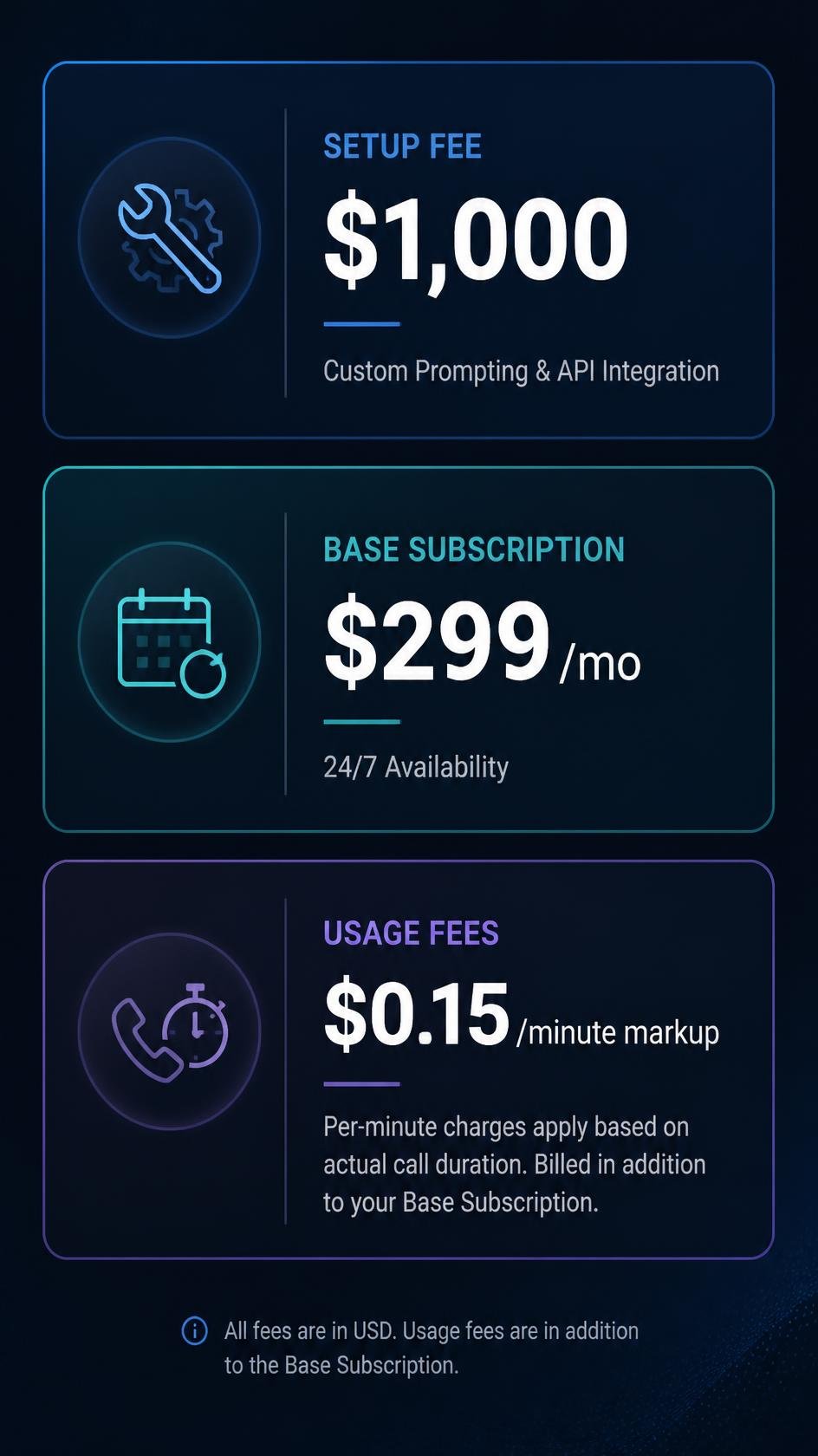
- The Setup Fee ($500 – $2,000): You charge this to build their custom knowledge base, connect the agent to their specific management system (like ServiceTitan or Calendly), and define the routing logic.
- The Monthly Retainer ($199 – $499/mo): This covers the 24/7 availability of the agent and ongoing prompt optimization.
- The Per-Minute Markup: You charge the client $0.20 to $0.30 per minute of talk time, generating a massive profit margin on the raw API cost.
Once the agent is built and integrated, the maintenance is near zero. A single agency operator can easily manage 50+ local business clients, generating highly passive, recurring revenue.
Next Steps: Launching Your Agency
The window of opportunity to establish yourself as an AI voice automation expert is right now. Before long, every local business will expect this technology as a baseline.
- Pick a Niche: Choose one specific industry (e.g., HVAC). Learn exactly which CRM they use and what their most common incoming calls are.
- Build a Demo: Use a tool like Vapi or Bland AI to build a prototype. Connect it to a dummy calendar via n8n.
- Call Your Prospects: The ultimate sales pitch is calling a business owner and having them speak directly to your highly capable, ultra-fast AI receptionist.
The traditional front desk is dead. The businesses that deploy intelligent, 24/7 voice agents will capture the market, and the agencies that build those agents will capture the wealth.
Frequently Asked Questions
What does an AI receptionist agency do?
An ai receptionist agency builds, deploys, and manages intelligent voice agents for businesses. Instead of hiring a human call center, the agency provides an AI system that answers calls, extracts customer intent, and syncs data to the business’s CRM without any manual data entry.
Can an AI virtual receptionist book appointments?
Yes. When properly integrated with backend orchestration tools like n8n, an ai virtual receptionist can check a calendar API in real time, find an open slot, and definitively book an appointment while conversing with the caller.
How does an AI answering service handle high call volume?
Unlike human receptionists who can only take one call at a time, ai voice agents operate on cloud infrastructure. If fifty people call simultaneously, the system spins up fifty separate instances instantly. An AI agent seamlessly handles massive call volume without ever placing a customer on hold.
Can I keep my existing phone number?
Yes. An AI agency can port a business’s existing phone number into a telephony provider like Twilio, or set up simple call forwarding. Customers will continue calling the exact same phone number they always have.
What happens if the AI doesn’t know the answer?
A well-designed AI agent relies on a strict routing rule. If a customer asks a complex or sensitive question that falls outside the agent’s programmed knowledge base, the AI will automatically execute a live transfer, handing the call off to a human staff member just like a traditional phone tree would.
Related Reading:
- n8n vs Make (2026): Which is Better for AI Automation? →
- Zapier AI Agents Review (2026): The Hidden Costs & Alternatives →
- How to Automate a Website Without an API Using AI Agents →
- Multi-Model AI Agent n8n: Build HydraFusion Patterns →
- OpenAI Structured Outputs in n8n (Fix JSON Errors) →
- AI Voice Receptionist Pricing (2026): What It Actually Costs →
- Best AI Receptionist Platforms in 2026: Buyer’s Guide →
n8n
Best for: technical automation workflows
Consider n8n when your workflow needs custom logic or control over deployment. Self-hosting also requires time for updates, backups, and monitoring.
Operant Solo may earn a commission if you purchase through this link, at no extra cost to you.
Vapi
Best for: developers building voice-agent workflows
Consider Vapi when you want an API-based approach to building a voice workflow. Evaluate the telephony, model, and usage costs alongside the implementation effort.
Operant Solo may earn a commission if you purchase through this link, at no extra cost to you.
Pingback: White Label Voice AI Platforms for Agencies: Independent Comparison
Pingback: Why US AI Voice Bots Fail at Hinglish ai receptionist
Pingback: Best Hinglish AI Receptionist for Dentists: 2026 Guide
Pingback: Best AI Receptionist in Hinglish: 2026 Comparison & Trial Guide
Pingback: AI Receptionist for Real Estate Agents in India (2026 Guide)
Pingback: AI Receptionist for Salons & Spas India: Automate Bookings
Pingback: AI Voice Receptionist Pricing: 2026 Costs and Build Guide
Pingback: Affordable AI Voice Receptionist: The Real Cost in 2026